A Visual Preview of Rumeli Fortress
Before you visit, it helps to know what you're actually walking into: a steep, hillside complex of three massive towers connected by curtain walls, overlooking one of the busiest and most scenic stretches of the Bosphorus. This gallery collects representative images of the fortress to give you a sense of scale, atmosphere, and the kind of views you can expect, alongside the practical detail covered in our what to see guide.
The Towers and Walls
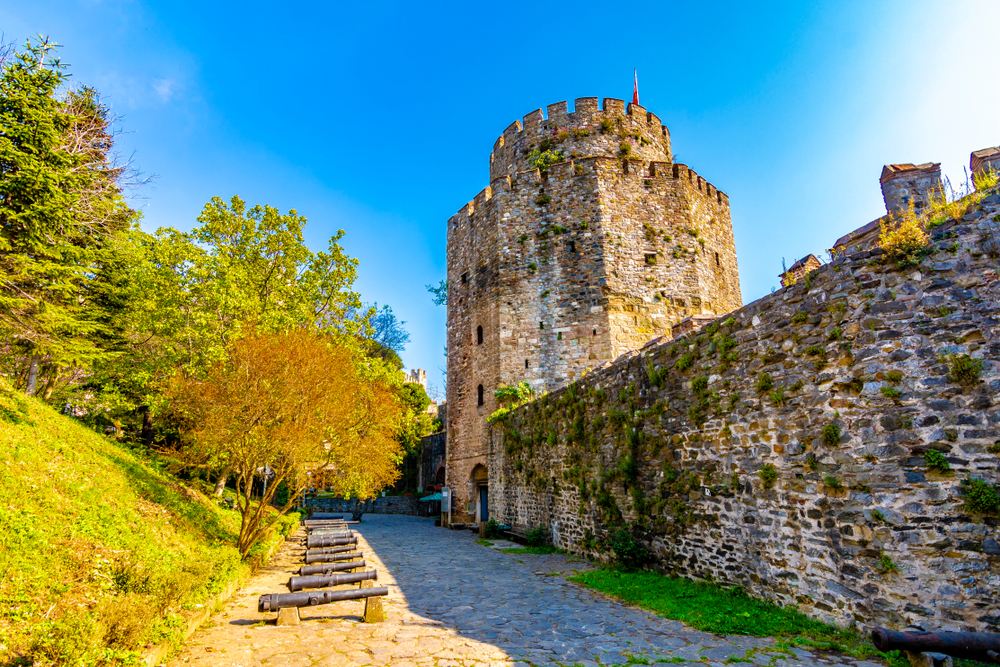
The fortress's three towers — Halil Pasha, Saruca Pasha, and Zaganos Pasha — dominate the skyline from the water and from the surrounding hills. Each was built and overseen by a different vizier under Sultan Mehmed II during the fortress's rapid four-month construction in 1452. For the full breakdown of each tower's role and dimensions, see our three towers page.
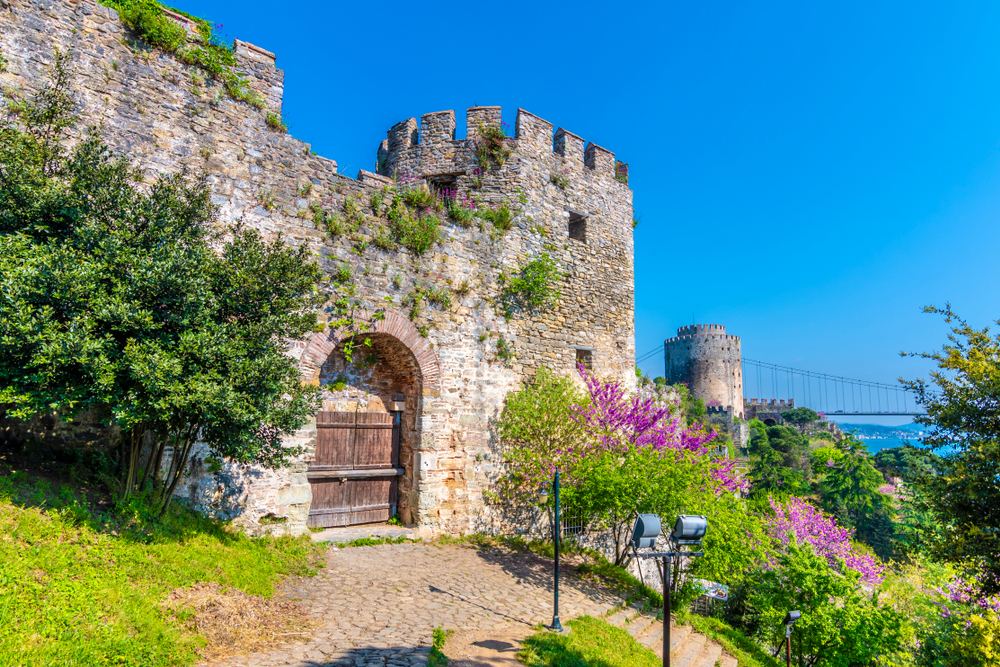
The connecting curtain walls and thirteen smaller bastions link the three main towers into a single defensive line. The rough, irregular stonework reflects the speed of the original construction — a deliberate trade-off made to close the Bosphorus before Byzantine or Genoese reinforcements could interfere with the coming siege, as explained on our conquest role page.
Bosphorus Views from the Fortress
From the upper tower platforms, the fortress offers sweeping views down the strait toward the Fatih Sultan Mehmet Bridge, ferries, and cargo ships. This is one of the most photographed vantage points in the complex — for a full list of the best angles, see our Bosphorus views guide.
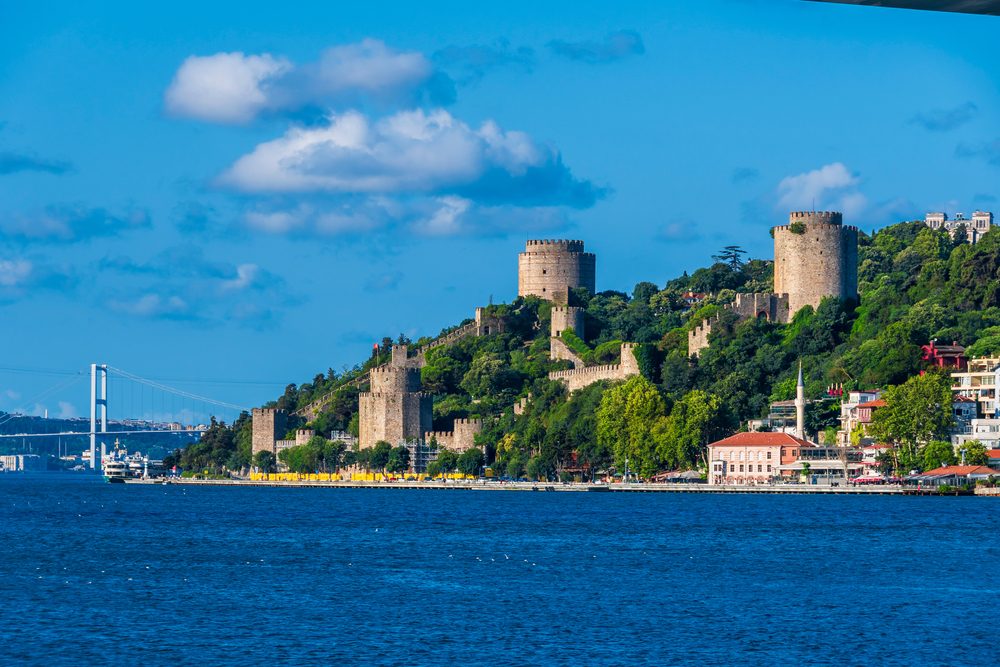
The fortress sits at the narrowest point of the Bosphorus, which is exactly why it was chosen as a defensive site in 1452. Watching the constant flow of shipping traffic below the walls gives a direct sense of why controlling this point mattered strategically, both then and now.
Fortress Architecture Detail
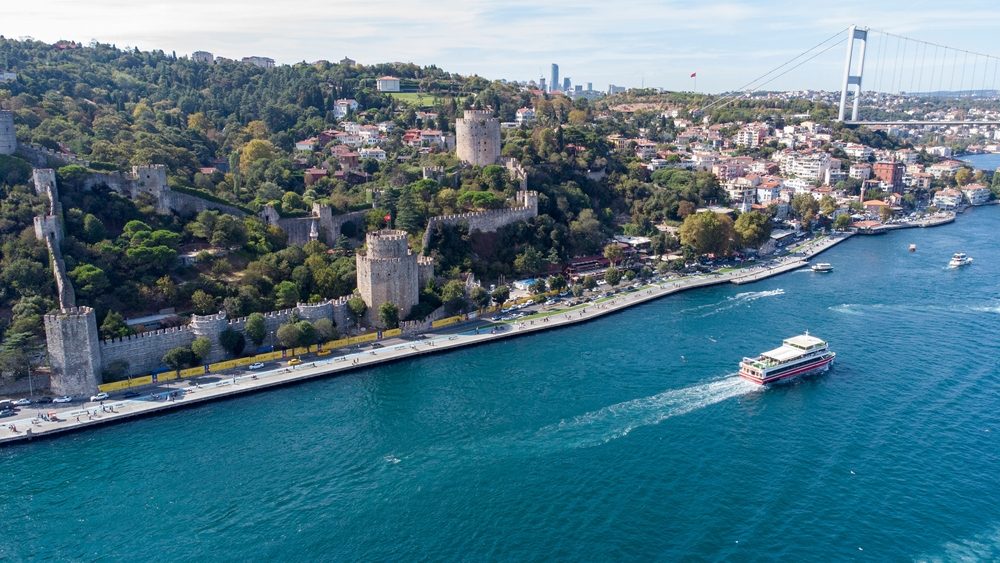
Close-in details reveal the arrow slits, arched doorways, and layered stonework typical of 15th-century Ottoman military architecture. Our architecture page covers the construction techniques and materials used across the site in more depth.
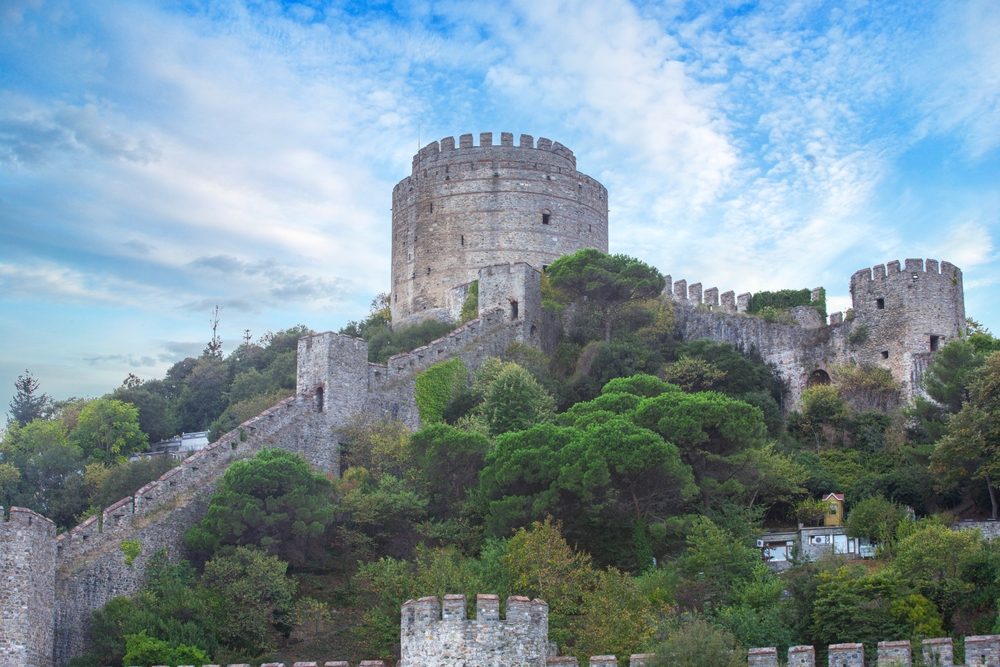
The interior grounds, now an open-air museum, include open courtyards where the amphitheatre and walking paths sit today. See our amphitheatre and concerts page for details on how this space is used for events.
Seasonal and Atmospheric Shots
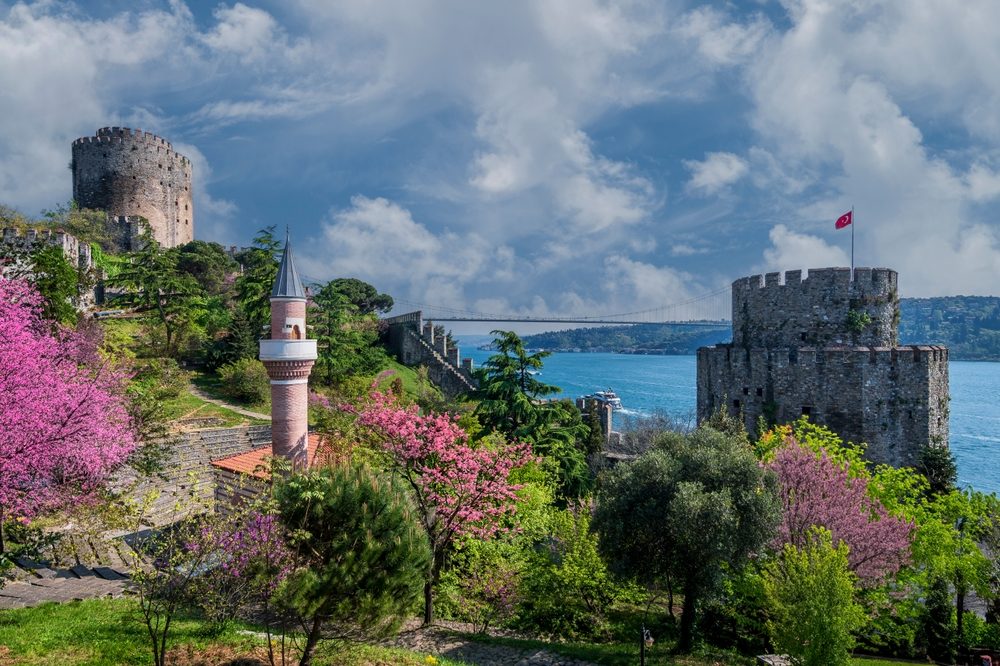
Weather and season change the character of the fortress considerably, from clear spring skies to moody winter cloud cover. Our best time to visit guide breaks down what to expect in each season, including which months give the best photography conditions.
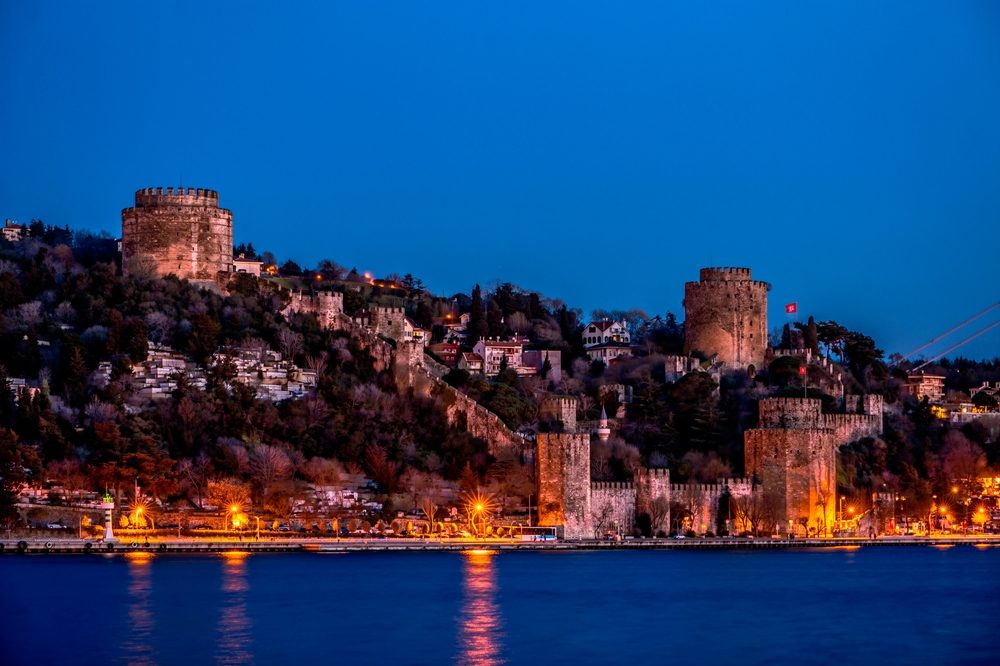
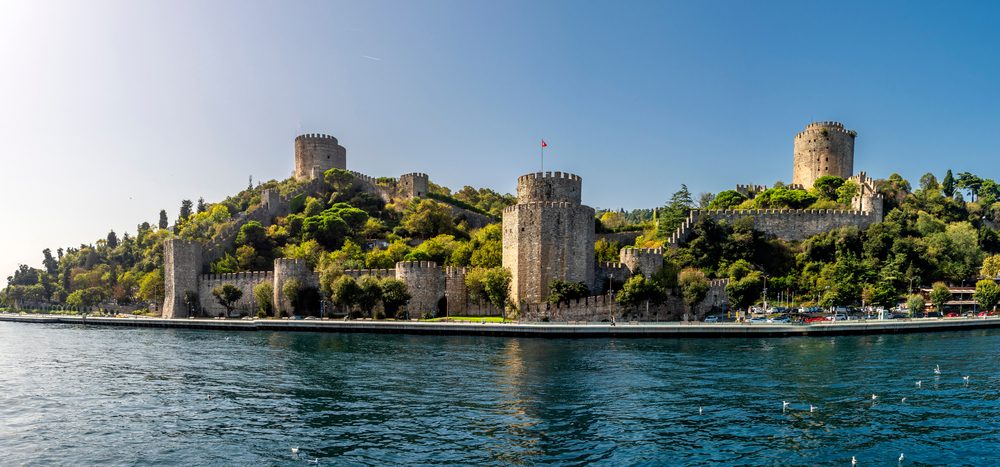
A wide-angle view showing how the fortress's towers and walls trace the contour of the hillside down to the water — useful for understanding the site's layout before you visit in person.
What the Photos Reveal About the Fortress's History
Looking through these images side by side, it's easy to see why Rumeli Fortress was chosen for this exact spot in 1452. The walls hug the shoreline at the Bosphorus's narrowest crossing, giving the towers clear sightlines up and down the strait in both directions — precisely the kind of coverage Mehmed the Conqueror needed to blockade Byzantine shipping before the siege of Constantinople. The images of ships passing directly beneath the walls aren't just scenic; they illustrate the fortress's entire original function.
The contrast between the massive, more finely finished Halil Pasha Tower and the smaller flanking towers also comes through in photographs — a visual reminder that each tower was assigned to a different vizier and built somewhat independently, a detail explored further on our three towers page.
Photographing the Fortress Yourself
If these images have you planning your own shoot, our photography guide covers the best light, angles, and practical rules (including drone restrictions) for photographing the fortress yourself. Because the site is entirely outdoors and built on a steep hillside, weather and season change its character dramatically — the difference between a hazy midsummer afternoon and a crisp autumn morning is significant enough to be worth planning around, as detailed on our best time to visit page.
Extending the Shoot Beyond the Fortress Walls
Many of the best complementary shots of Rumeli Fortress are actually taken from outside it — from the coastal road, from a passing ferry, or from across the bay in Bebek looking back at the hillside silhouette. Combine a photography-focused visit with a walk along the nearby Bosphorus shore, covered in our nearby attractions guide, for a broader set of shots beyond the fortress walls themselves. A stop at a waterfront café afterward, listed in our restaurants near Rumeli Fortress guide, is also a good place to review your shots over a coffee with the same view in front of you.
Image Index
| Image | Subject |
|---|---|
| Towers above the shoreline | Overview of the three towers |
| Curtain walls and bastions | Connecting fortifications |
| Panoramic Bosphorus view | View toward Fatih Sultan Mehmet Bridge |
| Ships on the strait | Shipping traffic below the walls |
| Stonework detail | Arched openings and masonry |
| Interior courtyard | Open-air museum grounds |
| Dramatic sky | Seasonal atmosphere |
| Wide-angle coastline | Full hillside layout |
Use this index alongside the gallery above to identify which parts of the fortress each image corresponds to before you visit, or to compare your own photos against these reference views afterward.